The “Hidden in Plain Sight” Angle Archaeologists just found a “glitch” in a 400-year-old Bible, might lead to the Garden of Eden
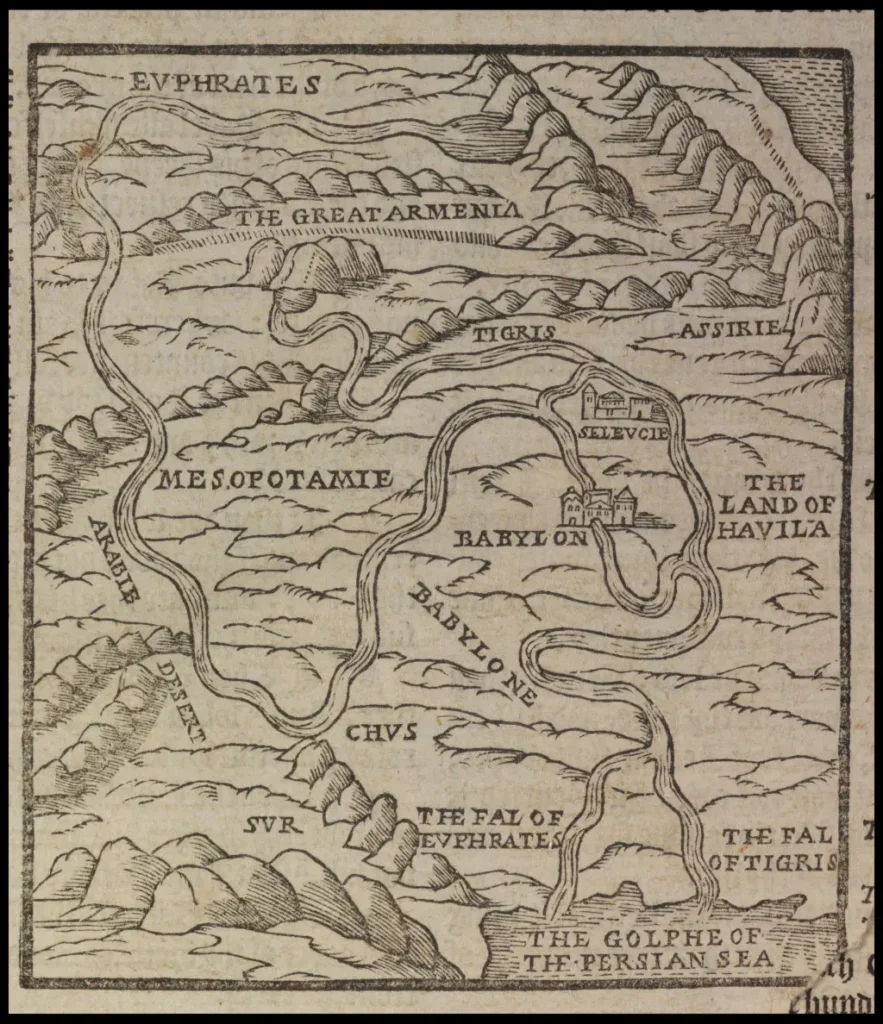
Imagine flipping through the weathered pages of a Geneva Bible and stumbling upon a map that claims to pinpoint the exact coordinates of paradise. For centuries, the Garden of Eden has been treated as a theological symbol or a poetic memory, but a discovery within this specific 16th-century text is turning a historical mystery into a tangible treasure hunt.

The Geneva Bible, produced in the 1560s, was far more than a translation; it was a revolutionary tool of the Protestant Reformation. Created by English exiles in Geneva, Switzerland, the Bible was deeply influenced by the theology of John Calvin, the city’s dominant reformer. Calvin’s emphasis on the sovereignty of God and a rigorous, literal study of Scripture transformed the Bible into a manual for living, complete with extensive marginal notes that guided the reader’s interpretation. It was the Bible of the common person, the pulpit, and famously, the pilgrims who settled in North America.
Tucked within this tradition of scholarly precision is a map that identifies a specific region as the site of the original Garden. While many saw Eden as an unreachable “once upon a time,” the cartographers and theologians of the Geneva circle operated with a sense of empirical curiosity. By aligning these ancient markers with modern satellite imagery, researchers are finding a surprising correlation between the map’s coordinates and specific river systems and topographical anomalies.
This discovery suggests that the reformers may have been drawing on lost geographic traditions or a more literal interpretation of the biblical landscape than previously thought. It moves the Garden of Eden out of the realm of Sunday school stories and into the field of forensic archaeology.
The thrill lies in the possibility that the “lost” paradise is not a myth, but a dormant physical site. By bridging the gap between John Calvin’s rigorous scholarship and modern geography, we are no longer just reading about the beginning of humanity—we are looking for the place where it all started.